

What Is the Difference Between an Exterior Venetian Blind (EVB) and an Architectural Sunshade ?
While exterior sunshades offer multiple benefits, including improved thermal and visual comfort and overall aesthetics, their primary purpose remains solar protection. Whether your project involves the construction or renovation of a residential building, commercial premises, offices, or an industrial site, this is an aspect that must not be neglected and should be considered from the outset. However, there are many variations, two of which are often confused: the Exterior Venetian Blind (EVB) and the architectural sunshades. Here is a brief overview to avoid any further confusion.
What is an Exterior Venitian Blind (or EVB) ?
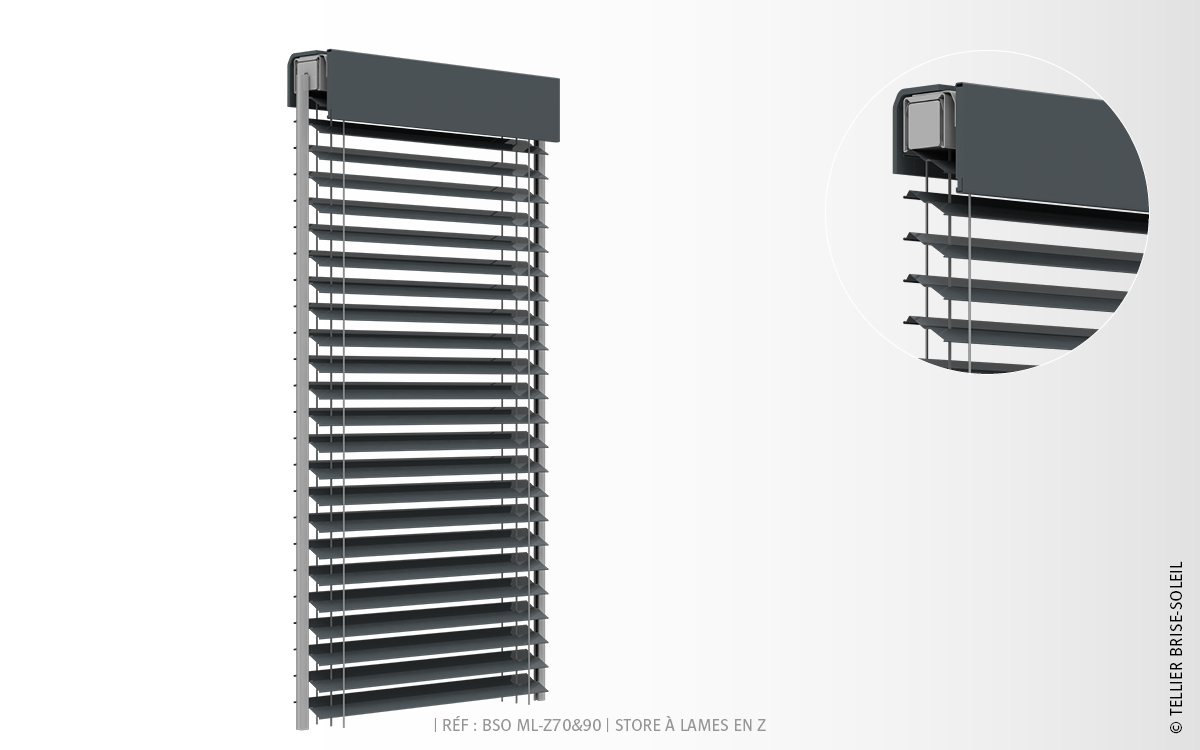 As part of the solar protection ranges, an EVB is a protective device composed of horizontal aluminium blades fixed to a movable structure.
Generally placed in strategic areas for people (such as a terrace or balcony), they have the advantage of being retractable. In other words, the EVB is preferred for occasional use, generally during the summer period to protect users in a specific location.
These blind slats can be tilted to control the amount of natural light and heat entering a defined space, offering a versatile solution for light and heat management.
EVBs are often fixed to building facades near high-traffic areas (such as an entrance or a large glass door) to reduce glare and overheating while preserving the view of the outdoors.
Solar protection in the form of architectural sunshades
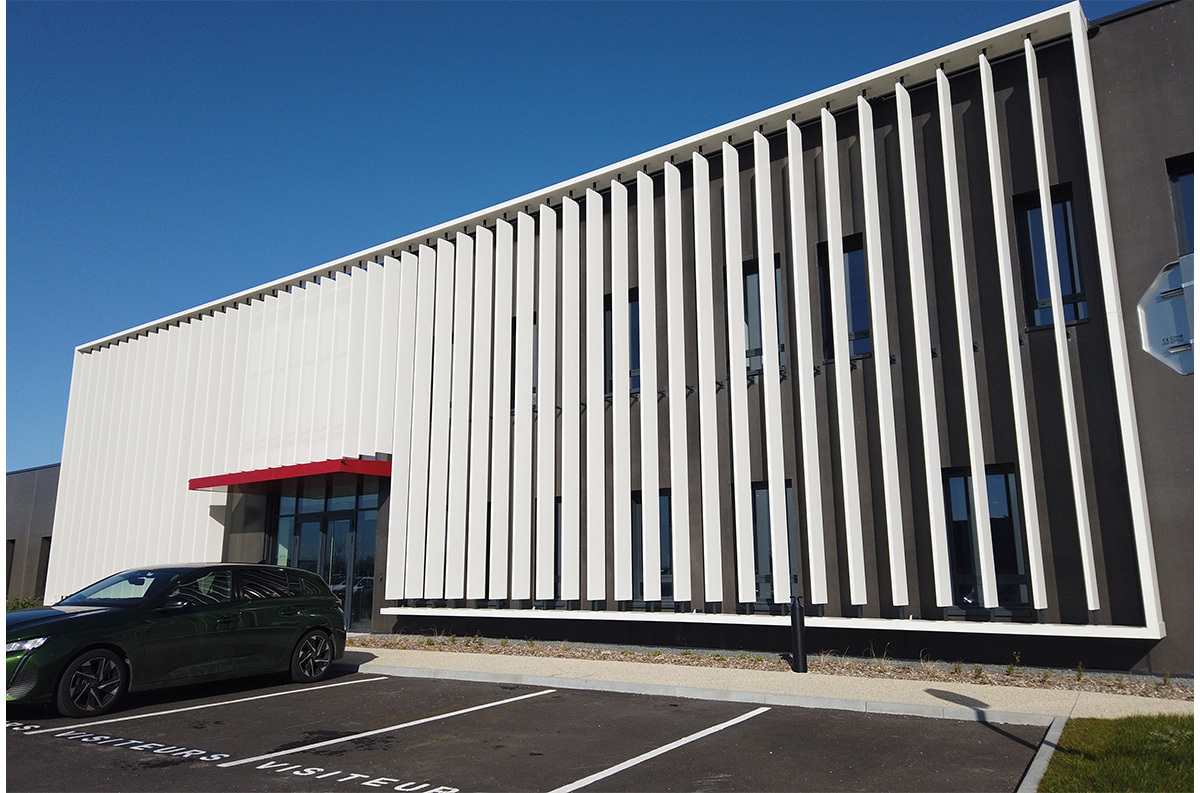 Solar protection louvers, also known as architectural louvered sunshades, are elements similar to sunshade blinds but with a slightly different design. Unlike EVBs which are movable (retractable), architectural louvers are often fixed and oriented to effectively block the sun's rays while allowing natural ventilation. These louvers are often installed above windows and/or on building facades to provide solar shading while adding a modern architectural touch.
Another significant difference is that this equipment requires very little care and maintenance and can easily cover large glazed surfaces. Indeed, it can be designed in very large dimensions, offering not only solar sunshading but also high resistance and, at the same time, improved wind resistance.
It should be noted that these can be fixed or adjustable (referred to as adjustable sunshades, or EVB), either manually, motorized, or even automated. In the latter cases, this type of installation allows for precise management of light flow, thus preventing glare and building overheating (or limiting heat loss). For more information, feel free to consult our article dedicated to EVB and its energy performance.
In summary, what is the difference between the two models?
The main difference between an EVB blind and architectural sunshade louvers lies in their functionality and design :
-
EVBs offer greater flexibility in terms of light and heat control due to their ability to be tilted or raised as needed.
-
Architectural sunshade louvers are fixed and oriented to effectively block the sun's rays while preserving the view of the outdoors.
Whichever model you choose for your solar sunshade, both solutions are effective for managing light and heat while improving the comfort and aesthetics of outdoor spaces. If you are looking for a supplementary solution for occasional use, EVBs may be the best option for you. Conversely, if you prioritize a more discreet, high-performance architectural solution with a longer lifespan, solar protection blades may be more suitable. Whatever your preference, it is important to consult our team to help you choose the best option for your specific project.
Our team at your service
Whatever the nature of your project, all our specialists are at your service to support you at every stage. From a simple initial contact for a study request to a quote request, our contact form is at your disposal, as well as our sales and Specification Team by phone at +33 (0)2 52 21 06 90.